Water Damage Restoration in Olympia, WA
Olympia was platted in 1850 at the head of Budd Inlet, became the capital of Washington Territory in 1853, and kept the job when the state came in 1889. The Legislative Building was finished in 1928 on a bluff above the Deschutes, and the neighborhoods that grew up around it between 1890 and 1940 are still there: craftsman and foursquare houses in South Capitol and Bigelow, bungalows on the Eastside, and small 1920s cottages in Wildwood and Governor Stevens. West of Capitol Lake, the city annexed its way out Cooper Point Road and Black Lake Boulevard in the 1960s and 1970s, and the housing there is ramblers and split-entries on larger lots.
The whole city sits on glacial till and outwash, gets about fifty inches of rain a year, and spends October through March with the ground full. The old houses have dirt crawl spaces and, often, their original galvanized supply lines. The downtown sits on tideflats filled in between 1909 and 1911, only a few feet above the inlet.
This site puts Olympia homeowners through by phone to an independent local water damage provider. The provider goes under the hatch with a meter before anything is decided.
Olympia water damage, from the crawl space to the attic
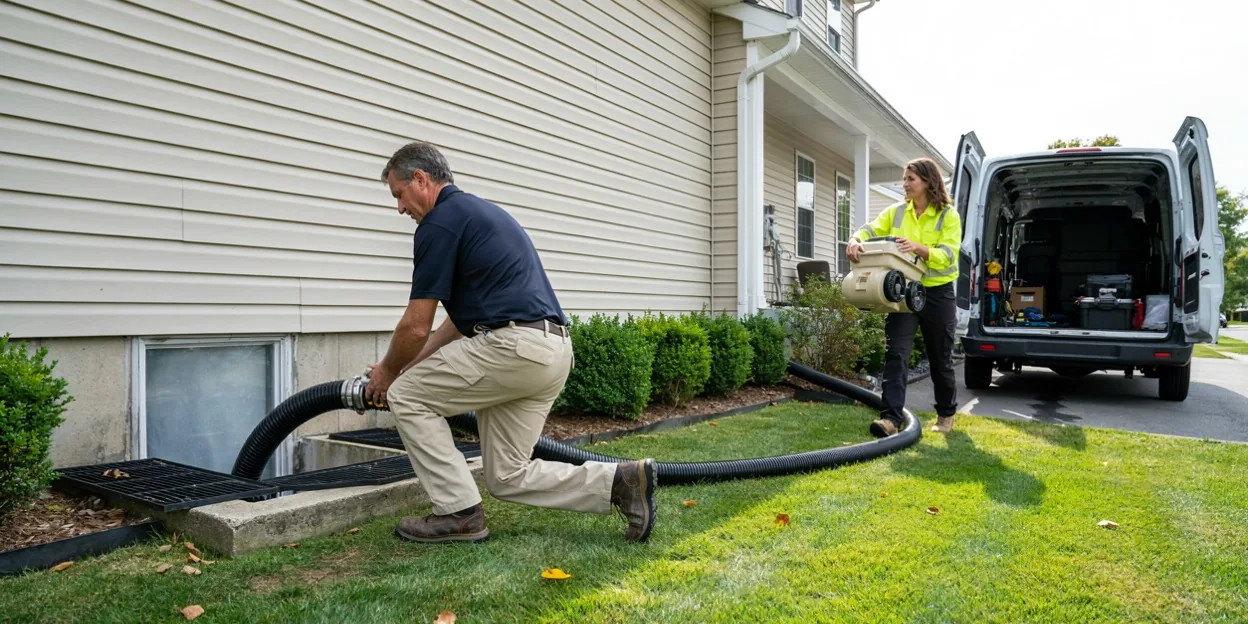
Water standing on the dirt under a South Capitol craftsman after a week of rain is a crawl space water extraction, and the wet insulation between the joists is part of it. A galvanized line that split under the kitchen of a Bigelow bungalow during the December 2022 cold is a burst pipe cleanup. A stain spreading across a Westside rambler ceiling after a southwest windstorm is roof leak water damage, and the wet attic insulation usually reaches well past the stain.
Permits, Capitol Lake, and the water under downtown
Rebuild work that touches plumbing, wiring, or framing after a water loss goes through the city's Permit Center on the second floor of City Hall, which also keeps the record of past permits on a lot. The drying itself needs no permit.
Capitol Lake was created in 1951 by damming the Deschutes at Fifth Avenue, and the state is now returning it to a tidal estuary through the Deschutes Estuary Restoration Project. For homeowners on the low ground near the isthmus and Percival Landing, the more pressing water is the king tide that comes up through the storm drains onto the street several times each winter.
Call (360) 364-8868 and describe what is wet and where. We put you through to an independent local water damage provider working in Olympia.
Services Available in Olympia
Water Extraction
Standing water pulled off fir floors, tile, and concrete on any level of an Olympia house, then the first moisture readings on the walls it reached.
Structural Drying
Air movers and dehumidifiers run against daily readings until joists, subfloor, and plaster reach a dry target in a damp Puget Sound winter.
Crawl Space Water Extraction
Water pumped out from under a craftsman or rambler after a wet-season storm, then the joists, insulation, and vapor barrier checked and dried.
Burst Pipe Water Damage
Cleanup after an old galvanized line or a frozen hose bib split, with the wall, floor, and crawl space below it metered and dried.
Storm and River Flood Cleanup
Mud, debris, and outside water removed after the Deschutes, the Chehalis, or a king tide came into the house, with soaked materials cut out and the rest dried.
Leak Detection
The source of a stain, a damp floor, or a high water bill traced with meters and thermal imaging before anyone cuts into plaster or lath.
Water Heater Leak Cleanup
A tank that let go in a garage, a utility closet, or a crawl space, with the floor and the walls around it dried before the new tank goes in.
Roof Leak Water Damage
Wet attic insulation, ceilings, and walls dried after a windstorm lifted shingles or moss-clogged gutters sent water behind the fascia.