Crawl Space Water Extraction in Olympia, WA
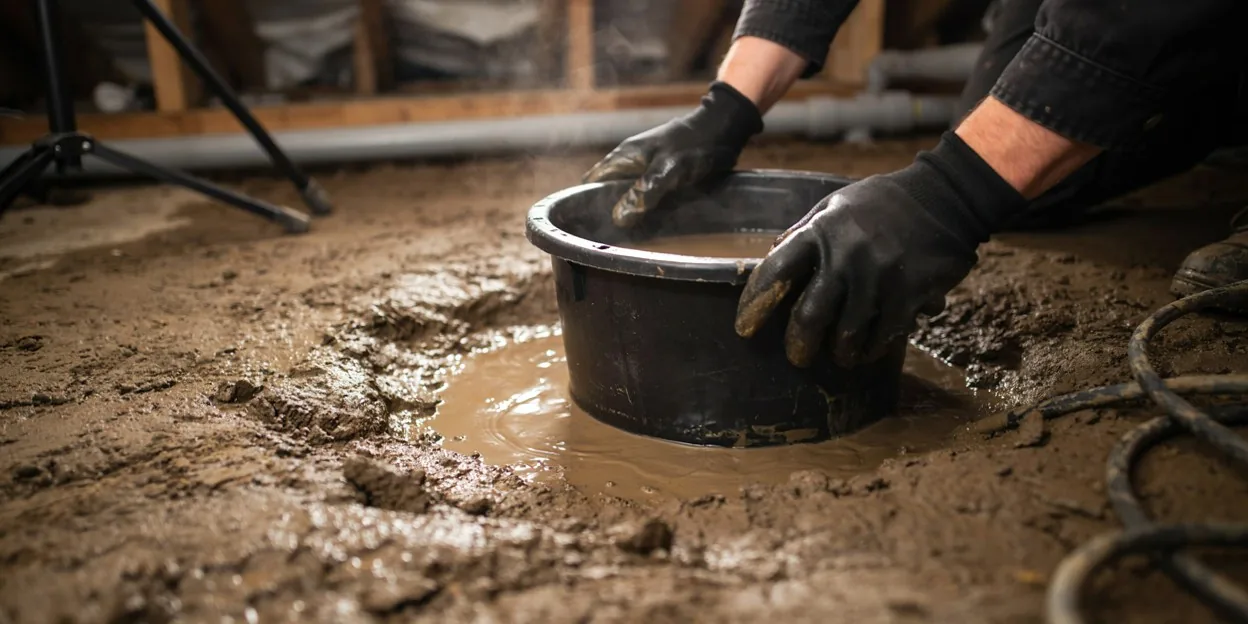
The furnace guy came out to your South Capitol house because the heat smelled musty, opened the crawl space hatch in the hall closet, and said you had better come look. There are four inches of water on the dirt, the insulation is hanging in wet ropes between the joists, and the ductwork is sitting in it. It has been raining for eleven days. This site puts you through to an independent local provider who pumps out and dries crawl spaces in Olympia and across Thurston County.
Getting the water out from under the house
The crew sets a pump at the low point of the crawl space and runs the discharge hose out a vent and away from the foundation, downhill if the lot allows it, so the water does not run straight back in. With the water down to the dirt they check the vapor barrier, pull the insulation that got wet, and meter the joists, the underside of the subfloor, the sill plate, and the posts and piers. They look for the way the water came in: through the vents, under the sill, up through the dirt, or from a pipe overhead.
If the water is groundwater, the crew will tell you that the pump lowers it today and the drying keeps the wood safe, but that the water table is the water table. A sump and a drain, or grading and downspout work outside, is a separate conversation for after the drying.
What you can do before the pump arrives
Do not go into a crawl space with standing water if there is any electrical in it: junction boxes, the furnace, a sump pump cord. Kill the breakers to that equipment from the panel. Close the main if you think a pipe under the house is the source and check whether the meter is still spinning. Move the downspout extensions so they run away from the house, and clear the storm drain at the curb if it is under leaves. Photograph the crawl space through the hatch. Then call and describe what you saw.
Insulation, vapor barrier, and joists: which leave and which stay
Fiberglass batts that got wet come out; they hold water against the joists and never dry hanging there. A vapor barrier under standing water is usually pulled, cleaned or replaced, and re-laid after the dirt dries. Douglas fir joists and subfloor in a pre-war Olympia house dry in place in most cases if the drying starts within a week. Ductwork that was under water is opened, checked, and cleaned or replaced. Once the water is out, structural drying puts a dehumidifier under the house with the vents sealed so the wood dries against dry air instead of December fog. Where the floor above went soft, the crew meters it from both sides and decides with you whether the fir stays or goes.
Why Olympia crawl spaces flood
The neighborhoods between the Capitol Campus and East Bay were built between 1900 and 1940 on glacial till, a dense mix of clay, sand, and gravel left by the last ice sheet that drains slowly and holds water near the surface all winter. Those craftsman and bungalow houses sit on post-and-pier or short stem walls with a dirt crawl space that is often only eighteen inches tall. Olympia gets about fifty inches of rain a year, three quarters of it between October and March, and by December the ground is full. Every storm after that has nowhere to go but sideways, and the crawl space is the first low spot.
The 1960s and 1970s ramblers on the west side and in Lacey sit on outwash gravel that drains better, but they were built with vents at grade and downspouts that dump at the foundation, so a saturated lawn drains straight through the vents. Any crawl space in the county can fill when a galvanized or copper line overhead splits; that becomes a burst pipe cleanup with the crawl space as the wettest room.
The December 2007 and January 2009 storms filled crawl spaces from Rochester to Tumwater, and the November 2021 atmospheric river did the same on saturated ground across the South Sound. Groundwater and surface water in a crawl space are usually excluded from a standard homeowner policy; a pipe failure under the house is often covered. This site cannot say what yours does. Have the crew document the water level, the source, and the readings from the first visit.
Calling about water on the dirt under the house
Say how deep the water is, whether it is touching insulation, ducts, or wiring, and whether it is raining or a pipe is the cause. Mention if the floor above is soft. Have the address and a callback number in front of you when you call (360) 364-8868.