Structural Drying in Olympia, WA
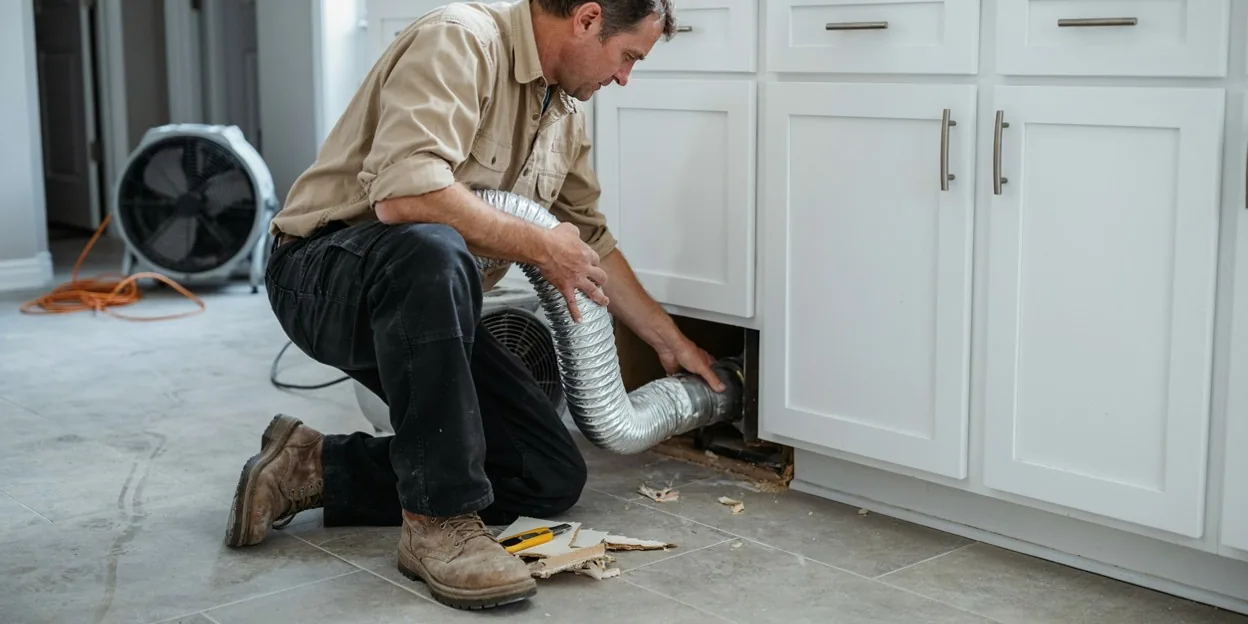
The plumber replaced the split galvanized line under the kitchen of your Wildwood house on Tuesday. By Thursday the floor looked fine, so you put the rug back. Two weeks later the fir boards along the sink cupped, the toe kick under the cabinets swelled, and the kitchen smelled like the inside of a cooler. The pipe was fixed. The house was never dried. This site puts you through to an independent local provider who dries houses in Olympia and across Thurston County.
Why a house in Olympia does not dry on its own between October and March
Wood, plaster, and subfloor give up water slowly, and they give it up even more slowly when the air around them is already near saturation. From late fall to early spring the outdoor humidity in Olympia sits in the eighties and nineties, the crawl space runs in the forties, and a house with the windows shut is barely drier than the yard. Opening the windows in December brings in more moisture than it lets out. Drying here means pulling water out of the air with machines while moving air across the wet material, then checking the numbers every day.
The crew starts with the readings from the extraction visit and sets a dry target for each material by comparing it to an unaffected sample of the same material elsewhere in the house. A fir floor, a plaster wall, and a Douglas fir joist all have different targets.
What the equipment does and why it stays for days
Air movers push air across the wet surface so moisture at the surface leaves and the moisture deeper in the wood moves toward it. Dehumidifiers pull that water out of the room air and drain it to a sink or a bucket. In a crawl space the crew often closes the vents, seals the hatch, and puts a dehumidifier under the house so the joists are drying against machine-dried air instead of forty-degree fog. The equipment runs around the clock, and someone comes back daily to meter, log, and move machines to where the readings say they are needed. A typical Olympia drying job runs three to five days; a crawl space can take longer.
What to expect at home while it runs
The machines are loud, the rooms they are in run warm, and the power draw shows up on the bill. Leave them running. Turning them off overnight adds a day to the job. Keep doors to the wet rooms closed if the crew asked for that, and keep kids and pets off the equipment. If the crew opened the bottom of a plaster wall or lifted a few floorboards, that is part of the drying, not the rebuild; the rebuild comes after the last dry reading. Before drying starts, standing water comes off with water extraction, and water under the house comes out with crawl space water extraction.
Materials that dry well here, and the ones that do not
Old-growth fir framing and subfloor in a pre-war Olympia house are dense and usually dry in place if the drying starts within a few days. Fir flooring often flattens as it dries, and it is worth trying to save. Lath and plaster dries slowly but well if the cavity behind it is opened at the base. Fiberglass insulation in the crawl space that got soaked comes out; it does not dry hanging between joists. Particleboard underlayment from a 1970s rambler remodel swells and stays swollen, so it comes out. Carpet pad comes out; the carpet over it often dries.
Wet-season drying in the South Sound
The storms that saturate this county come in runs. The atmospheric rivers of December 2007, January 2009, December 2015, and November 2021 each dropped several inches of rain on ground that was already full, and a house that got wet in one of them was drying against outdoor air that stayed near saturation for weeks. That is why crews here rely on dehumidifiers rather than open windows, and why a crawl space that took storm water in Tumwater or Rochester may need machines under the house for a week.
Whether the drying is covered depends on the source of the water and on your policy, which this site cannot read. The crew's daily moisture log is the document your adjuster will ask for, because it shows what was wet, for how long, and when it came back to dry.
Calling when the house is fixed but still wet
Say what got wet, when, and what has been done so far. Mention whether the water is in a room or under the house, and whether a plumber has fixed the source. Keep the address and a callback number nearby and call (360) 364-8868.