Water Damage Restoration in Northeast Olympia, WA
Northeast Olympia is the wedge of the city between East Bay Drive and the Bigelow hill on the west and the Lacey line on the east, north of the Eastside and south of Squaxin Park. It grew after the war: 1940s and 1950s cottages and ranch houses on the blocks off San Francisco Avenue and Bethel Street, 1960s and 1970s ramblers and split-levels on the higher ground toward Boulevard Road, and the bluff-top houses along East Bay Drive with their view of the inlet and the Port's log yard. It is the part of Olympia where the sidewalks stop and the fir trees start.
The ground is glacial till under fir and maple, and the ramblers were built with low crawl spaces and grade-level vents that let a saturated yard drain under the house. The bluff along East Bay is wet ground that moves; the houses on it take water at the uphill wall of the crawl space every wet season and shed it toward the inlet. Mission Creek and Indian Creek drain the neighborhood to the bay, and both spread across their flats in a November atmospheric river. The southwest windstorms that come up the inlet drop fir limbs on roofs here first, and the arctic weeks of December 2021 and December 2022 froze hose bibs on north walls.
This site connects Northeast Olympia homeowners with an independent local water damage provider by phone. The provider goes under the house before deciding anything.
Northeast Olympia water damage under the firs
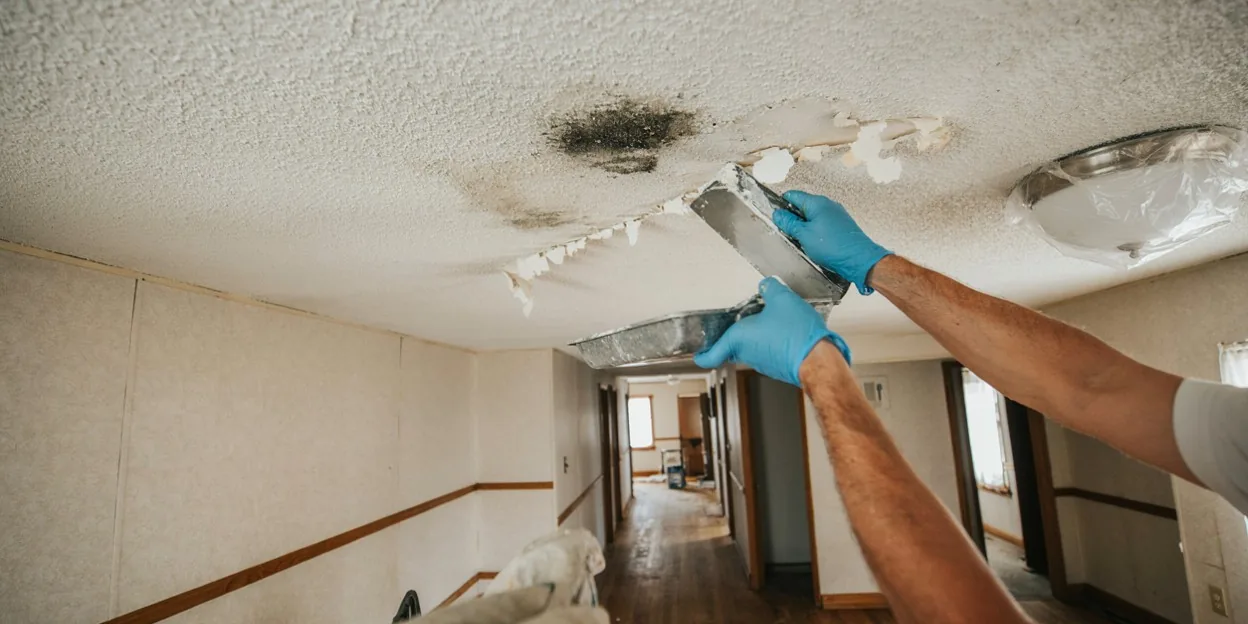
A brown ring spreading across a bedroom ceiling after a limb came down in a windstorm is roof leak water damage, and the wet attic insulation usually runs well past the stain. A crawl space that filled through the vents when the yard saturated is a crawl space water extraction. A hose bib that froze and split inside a garage wall is a burst pipe cleanup.
The park on the point
The neighborhood's north end is Squaxin Park, three hundred acres of second-growth forest and saltwater shoreline on Budd Inlet that the city has held since 1905 and renamed in 2022 for the Squaxin Island Tribe whose land it was. Its ravines and wet forest floor are the same ground the houses along East Bay Drive are built on. Rebuild permits go through the city's Permit Center; the pumping and drying need none.
Call (360) 364-8868 and say whether the water came from the roof, the ground, or a pipe. We put you through to an independent local water damage provider serving Northeast Olympia.
Services Available in Northeast Olympia
Water Extraction
Standing water pulled off fir floors, tile, and concrete on any level of an Olympia house, then the first moisture readings on the walls it reached.
Structural Drying
Air movers and dehumidifiers run against daily readings until joists, subfloor, and plaster reach a dry target in a damp Puget Sound winter.
Crawl Space Water Extraction
Water pumped out from under a craftsman or rambler after a wet-season storm, then the joists, insulation, and vapor barrier checked and dried.
Burst Pipe Water Damage
Cleanup after an old galvanized line or a frozen hose bib split, with the wall, floor, and crawl space below it metered and dried.
Storm and River Flood Cleanup
Mud, debris, and outside water removed after the Deschutes, the Chehalis, or a king tide came into the house, with soaked materials cut out and the rest dried.
Leak Detection
The source of a stain, a damp floor, or a high water bill traced with meters and thermal imaging before anyone cuts into plaster or lath.
Water Heater Leak Cleanup
A tank that let go in a garage, a utility closet, or a crawl space, with the floor and the walls around it dried before the new tank goes in.
Roof Leak Water Damage
Wet attic insulation, ceilings, and walls dried after a windstorm lifted shingles or moss-clogged gutters sent water behind the fascia.