Water Damage Restoration in Bigelow, WA
Bigelow is the neighborhood on the hill northeast of downtown Olympia, between East Bay Drive and Puget Street, named for the Bigelow House on Glass Avenue that Daniel and Ann Elizabeth Bigelow built around 1860 and that is the oldest house still standing in the city. The rest of the neighborhood filled in behind it between 1890 and 1940: Victorian cottages on the lower blocks near the bay, craftsman bungalows on the hill, and small 1930s and 1940s houses toward Bigelow Highlands and the park. The lots are narrow and the streets are steep, and everything drains west toward East Bay.
The houses sit on dirt crawl spaces cut into the hillside, so the uphill side of the crawl space is often below grade and takes groundwater every wet season while the downhill side stays dry. Galvanized supply lines and cast iron drains are still common, and the coldest weeks, like the arctic spell after Christmas 2021 and the one before Christmas 2022, split them behind bathtubs and under kitchen floors. Steep lots also mean the neighbor's runoff is your runoff.
This site connects Bigelow homeowners with an independent local water damage provider by phone. The provider looks at the uphill wall of the crawl space first.
Bigelow water damage on a hillside lot
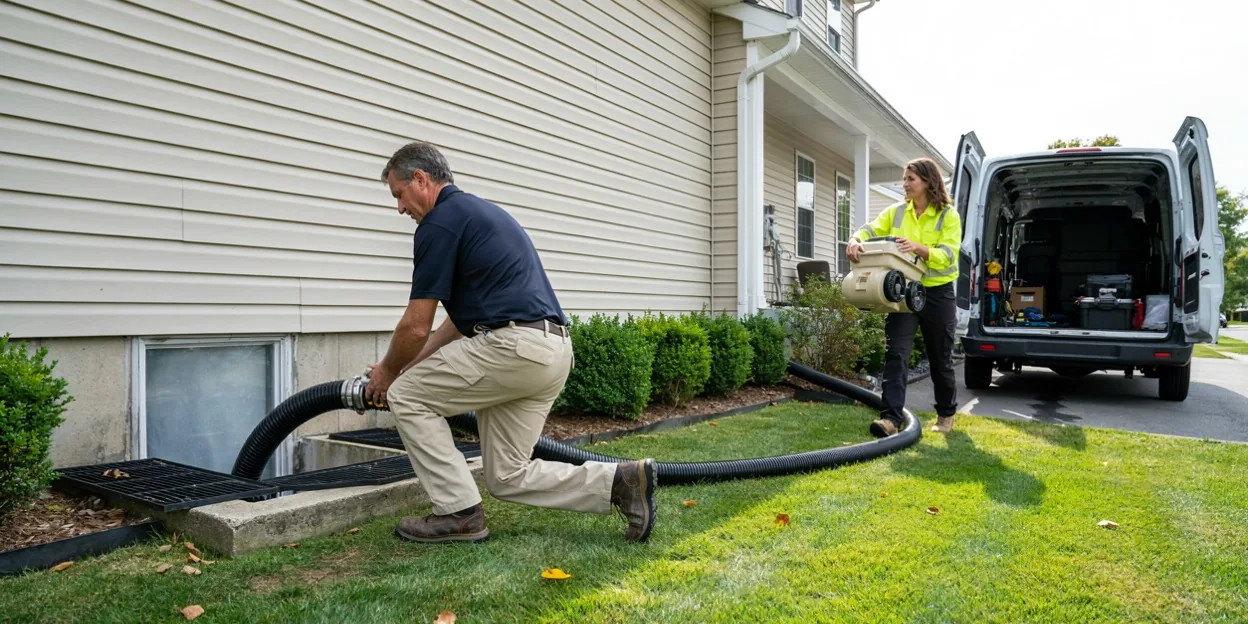
A crawl space with water pooled along the uphill wall after a December storm is a crawl space water extraction, and the discharge hose runs downhill toward the bay. A soft fir floor in a 1905 cottage with no visible leak points to a galvanized pinhole under the house and starts with leak detection. A line that split in the cold is a burst pipe cleanup.
The oldest house in town
The Olympia Historical Society and Bigelow House Museum keeps the 1860 house open to visitors, and it is a good picture of how the neighborhood's houses were built: wood frame on a crawl space, with the same hillside water problems its neighbors have had for a century and a half. Rebuild permits go through the city's Permit Center; the pumping and drying need none.
Call (360) 364-8868 and say whether the water is on the uphill side of the crawl space or coming from a pipe. We put you through to an independent local water damage provider serving Bigelow.
Services Available in Bigelow
Water Extraction
Standing water pulled off fir floors, tile, and concrete on any level of an Olympia house, then the first moisture readings on the walls it reached.
Structural Drying
Air movers and dehumidifiers run against daily readings until joists, subfloor, and plaster reach a dry target in a damp Puget Sound winter.
Crawl Space Water Extraction
Water pumped out from under a craftsman or rambler after a wet-season storm, then the joists, insulation, and vapor barrier checked and dried.
Burst Pipe Water Damage
Cleanup after an old galvanized line or a frozen hose bib split, with the wall, floor, and crawl space below it metered and dried.
Storm and River Flood Cleanup
Mud, debris, and outside water removed after the Deschutes, the Chehalis, or a king tide came into the house, with soaked materials cut out and the rest dried.
Leak Detection
The source of a stain, a damp floor, or a high water bill traced with meters and thermal imaging before anyone cuts into plaster or lath.
Water Heater Leak Cleanup
A tank that let go in a garage, a utility closet, or a crawl space, with the floor and the walls around it dried before the new tank goes in.
Roof Leak Water Damage
Wet attic insulation, ceilings, and walls dried after a windstorm lifted shingles or moss-clogged gutters sent water behind the fascia.